 BACK
BACK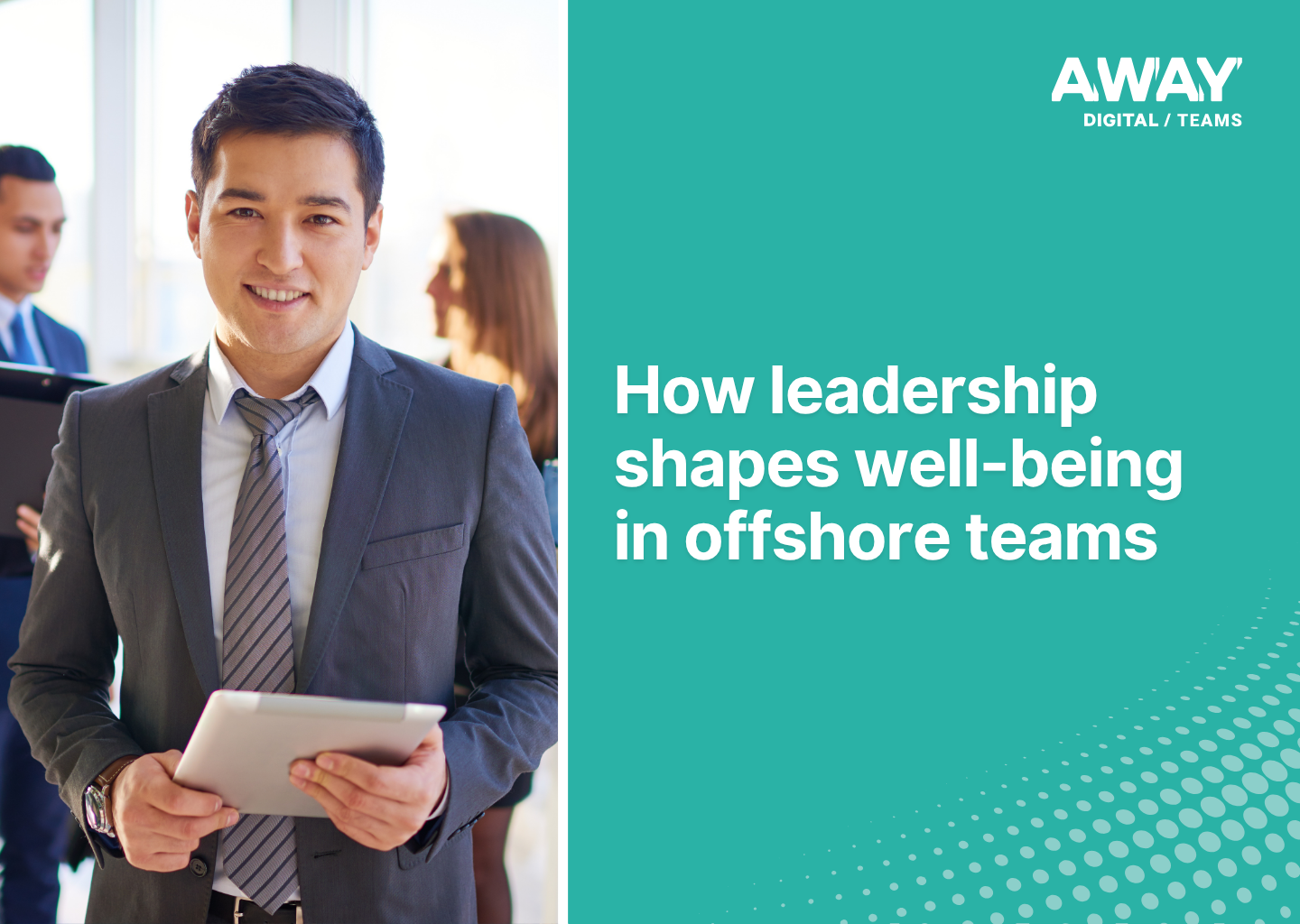
Have you ever noticed how even the most capable teams can face burnout, disconnection, or a fading sense of belonging?
In offshore settings, distance makes strong, human-centered leadership even more essential, the kind that builds trust, clarity, and connection across borders.
Leadership directly shapes well-being. A global study found that 70% of engagement depends on the manager, and teams led with empathy and transparency report significantly lower burnout and turnover.
When leadership is intentional, offshore groups thrive, alignment strengthens, collaboration flows naturally, and a shared sense of purpose turns distance into strength. Here’s how strong leadership builds healthier, more resilient global teams.
Table of contents
Why leadership determines offshore team well-being
-
Leadership shapes the experience, not the location
The difference between high performance and high burnout rarely lies in geography, it lies in leadership.
Managers set the tone for clarity, trust, and emotional stability. Recent data shows that manager quality has a greater impact on well-being than work mode or location, and employees who know what’s expected of them are 47% less likely to experience burnout and 23% less likely to report poor work-life balance.
Across time zones, that clarity becomes the anchor that keeps collaboration smooth and morale intact.
-
Connection is built, not assumed
Remote and offshore environments don’t fail because of distance, they falter when leaders forget to build connection. Harvard Business Review notes that loneliness and isolation are now among the top causes of disengagement between teams.
Effective leaders counter this by fostering visibility, recognition, and shared purpose. Regular check-ins, or occasional on-site visits to the offshore office, go a long way in building connection and trust. Especially when leaders apply principles of cross-cultural management to bridge differences in communication styles and expectations.
When leaders invest in both structure and human connection, offshore staff don’t just perform, they thrive. They become communities defined not by distance, but by trust, rhythm, and collective momentum.
The leadership mindset that drives well-being
1. Empathy and cultural intelligence (CQ)
Great leaders go beyond managing tasks, they recognize cultural nuances and adapt their behavior to bring out the best in every region. A leader’s cultural intelligence (CQ) correlates significantly with improved staff outcomes in diverse settings.
Practically, empathetic leaders may schedule monthly check-ins across regions, recognise local holidays in Vietnam, host small-scale offshore team visits, and adapt communication styles to regional preferences. These consistent habits build trust, reduce friction, and help everyone from different cultures collaborate smoothly.
2. Psychological safety and open communication
When people feel safe to share ideas, raise concerns, and admit mistakes, both performance and well-being rise. Leaders who foster openness and voice equity, through transparent decisions, clear escalation paths, and inclusive discussions that span regions like Vietnam and the U.S., create an environment where everyone feels heard and valued.
That sense of safety strengthens connection, reduces isolation, and builds resilience across geographically distributed teams, turning distance into trust, not tension.
3. Purpose-driven leadership
A shared sense of purpose turns remote collaboration into genuine commitment. Research shows that manager quality directly influences employee well-being, and when fully remote workers are both engaged and thriving, only 38% are actively seeking new opportunities.
Purpose-driven leaders make this tangible by helping offshore experts understand the impact of their work. When a Vietnam-based developer sees how their code drives a U.S. product launch or improves customer experience in Australia, everyday tasks gain meaning. That clarity fuels motivation, reduces burnout, and deepens connection across borders.
Practical ways leaders can support offshore team well-being

1. Build connections beyond tasks
Connection across offshore operations comes from shared experiences, not just shared objectives. Beyond regular meetings, leaders can create moments of belonging, spotlighting cross-regional wins, encouraging culture-sharing sessions, or organizing hybrid events where onshore and offshore colleagues celebrate milestones together.
Research shows that leaders who intentionally nurture social cohesion help reduce interpersonal tension and strengthen long-term well-being in remote environments. When people feel seen as collaborators, not just task owners, alignment and trust flow naturally, even across borders and time zones.
2. Recognise and reward efforts fairly
Recognition must cross cultural and hierarchical lines to feel meaningful. Leaders should publicly celebrate achievements in channels and privately acknowledge individual contributions. Doing so bridges regional and role differences, reinforces value, and boosts motivation across diverse locations.
3. Provide development and growth opportunities
Offshore professionals thrive when they see clear pathways for learning and growth. Leaders who mentor, sponsor development plans, and connect remote individuals to broader business goals foster stronger engagement and loyalty.
For example, inviting outsourced members to Australia for in-person training or knowledge exchange not only sharpens technical skills but also deepens connection and shared purpose. These experiences signal long-term investment. turning offshore contributors into confident, committed partners in growth.
4. Monitor workload and boundaries
Even across time zones, leaders must model balance and protect boundaries. A recent survey found that 47% of remote talent worry about blurred work-life limits, highlighting the risk of overextension.
Setting healthy time-zone rhythms and managing handovers thoughtfully keeps people productive and well-rested. For instance, a U.S. tech team might block “no-meeting hours” in Vietnam or schedule non-urgent work during overlapping times to avoid late-night or early-morning disruptions.
5. Enable local autonomy and trust
Effective leaders balance empowerment with alignment. Encouraging outsourced staff, such as those in Vietnam, to share ideas, propose improvements, and take initiative fosters creativity and ownership.
However, major decisions should still flow through shared review and accountability to ensure consistency across regions. This balance of trust and guidance builds confidence, strengthens collaboration, and keeps global professionals invested in collective outcomes.
Conclusion
Success in global collaboration runs on more than systems, it runs on people. When leaders build trust, foster belonging, and lead with clarity, distance becomes connection and talent feels united by purpose. When leaders build trust, foster belonging, and lead with clarity, distance becomes connection and talent feels united by purpose, something that is only possible with strong cultural fit in an outsourcing partnership.
When that mindset becomes part of everyday rhythm, offshore hubs grow into genuine extensions of the business, aligned, motivated, and capable of lasting impact. Trust, quality, and communication are the foundation of every high-performing offshore team, and when they guide daily work, results don’t just improve, they endure.