 BACK
BACK
When businesses plan for growth, hiring budgets often centre on salaries and onboarding expenses. However, the hidden financial and operational toll of employee turnover, particularly within the critical first 6–12 months, can far outweigh these initial costs. Turnover at this stage not only disrupts workflows and delays processes, but also erodes team morale and drains valuable resources, such as the time invested in training, the productivity of team members who step in to cover gaps, and the budget spent on recruitment, onboarding systems, and project realignment.
As teams grow, the impact of turnover becomes harder to absorb. Research shows that replacing an employee can cost up to 33% of their annual salary, once you account for recruiting, onboarding, lost productivity, and the pressure placed on remaining staff to fill the gap.
Understanding the full financial and operational impact of attrition is essential for sustainable growth. Our eBook explores these challenges in depth and introduces a lasting solution: dedicated offshore teams.
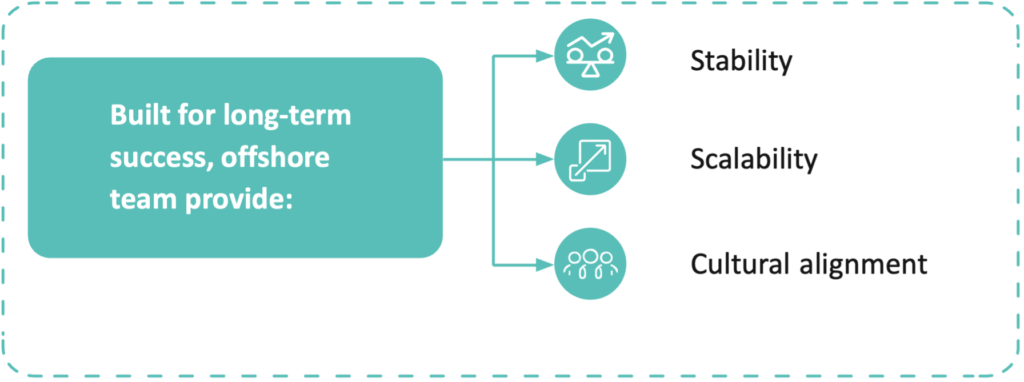
Table of contents
Why churn is the real threat to team performance
Behind every resignation is a hidden cost, employee turnover is more than a people problem; it’s a business one. When you factor in recruitment, training, and lost productivity, replacing an employee can be a significant expense. But the impact goes deeper. Here are key reasons why churn undermines team performance:

The rising cost of employee turnover
Employee turnover is one of the most pressing challenges facing companies today. Replacing a single employee can cost up to 33% of their annual salary, factoring in recruitment, training, and lost productivity, according to Employee Benefit News.

But the true cost runs deeper. Frequent churn disrupts workflows, lowers morale, and weakens client experience, especially when key points of contact leave. With each departure, institutional knowledge is lost, teams are stretched thinner, and client trust can suffer. Reducing turnover isn’t just about managing costs, it’s about protecting performance, culture, and the relationships that keep business moving forward.
Why churn is accelerating
- Talent shortages and wage inflation
The ongoing talent crunch has made the job market increasingly competitive, especially in sectors that rely on specialised skills. As a result, turnover rates have surged, as employees feel empowered to leave for better pay, flexible work arrangements, or more promising career paths. This shift has made it harder for businesses to retain top talent without continuously raising compensation and benefits.

- Burnout and career uncertainty
Employee well-being continues to suffer under mounting workloads and unclear progression pathways. Burnout and a lack of career clarity remain key drivers of churn. Gallup’s 2025 workplace report reveals that 51% of employees are either actively looking for or open to new job opportunities, the highest level of job-switching activity since 2015. It signals a broader disengagement as workers seek meaningful engagement and growth.
- Inefficient hiring and onboarding
Understaffed and overstretched HR teams often struggle to invest adequate time in vetting for cultural fit and long-term potential. As a result, rushed or misaligned hires are increasingly common. Without strong onboarding and integration processes, these mis-hires are more likely to leave within the first year, adding to the cycle of instability and putting further pressure on internal teams.

The true cost of losing a team member
Employee turnover impacts more than just the bottom line, it disrupts operations, erodes morale, and hampers growth. Here’s a breakdown of the key factors:
- Recruitment costs: Replacing an employee involves substantial expenses, including advertising, interviewing, and screening. Estimates suggest that turnover costs can range from 30% to 200%of an employee’s annual salary, depending on the role and industry.
- Onboarding and training investment: New hires often require extensive training to reach full productivity. It can take one to two years for a new employee to match the output of their predecessor, leading to indirect costs such as lost productivity and increased supervision.
- Lost knowledge and disrupted workflows: Departing employees take with them valuable institutional knowledge, creating gaps that hinder team efficiency. This knowledge loss can disrupt workflows and lead to mistakes, affecting overall productivity.
- Delayed projects and missed opportunities:can delay project timelines and hinder innovation, as teams High turnover scramble to fill gaps. Additionally, frequent departures can lower morale, with 70% of employees citing workplace friendships as critical to job satisfaction. The loss of these connections can lead to disengagement among the remaining staff.